
Acupuncture for Dogs: Relief for Arthritis and Pain
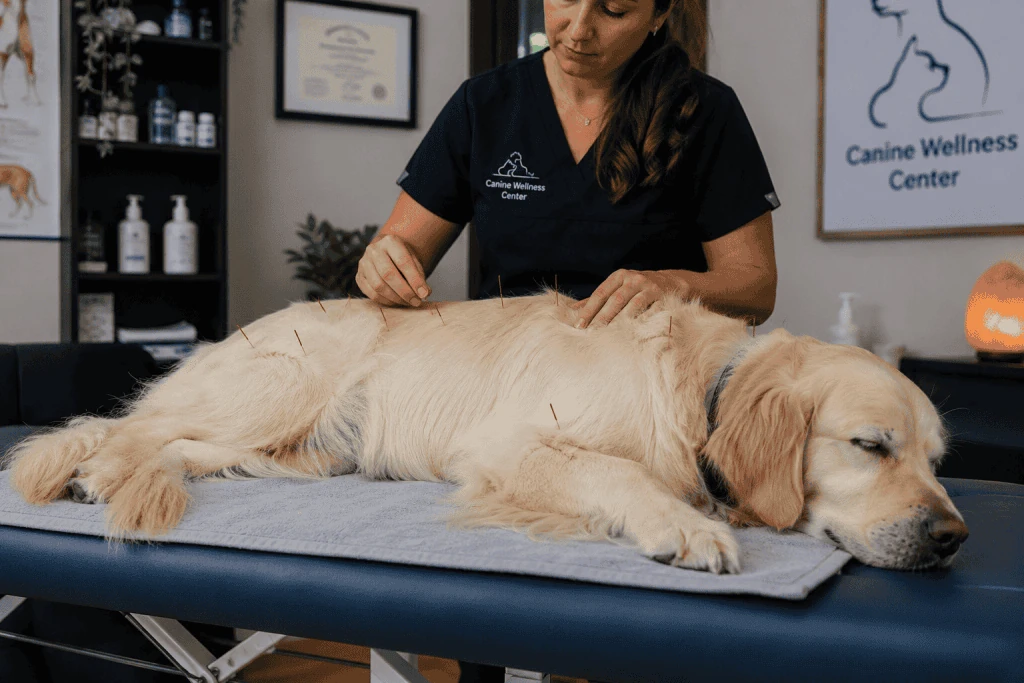
Watching your dog struggle with joint pain, arthritis, or reduced mobility is hard on everyone in the house. When conventional treatment alone does not bring enough relief, acupuncture for dogs is a supportive therapy that more veterinarians now recommend to ease discomfort and help older or chronically sore dogs stay comfortable and active.
Here is the part most pet parents miss. A dog labeled “stubborn,” “lazy,” or “anxious” is very often a dog in pain, and the dog has no other way to tell you. That single idea changes how you read your dog’s behavior, and it sits at the center of why more veterinarians now reach for acupuncture as part of a broader care plan.
Traditional treatments manage pain well in many cases, but they do not always deliver enough relief on their own. That gap is what pushes veterinarians and pet owners to look at acupuncture as a supportive option.
Veterinary acupuncture once carried a reputation as an unconventional approach. Growing clinical interest and research have changed that, and acceptance among veterinarians continues to rise. The shift shows up in veterinary education too. Acupuncture certification now appears regularly in continuing education for practicing vets.
Acupuncture for dogs works as a gentle, non-surgical supportive therapy. It can help manage pain and improve mobility. For older dogs, or dogs dealing with chronic conditions, it can become a valuable part of a plan that keeps them comfortable and active.
What Is Dog Acupuncture?
Veterinary acupuncture involves inserting very fine, sterile needles into the body to stimulate nerves and support circulation. Research suggests acupuncture prompts the body to release natural pain-relieving compounds, including endorphins and serotonin [1].
A typical session runs about 20 to 45 minutes. The acupuncturist settles your dog into a comfortable position and begins once your dog feels calm and relaxed. They place needles in targeted areas based on your dog’s specific needs, leave them briefly, then remove them. Most dogs get used to the process quickly and need little or no restraint.
One of the most common questions pet parents ask is whether acupuncture hurts. Most dogs tolerate it very well. The needles run much thinner than the ones people picture, and the process moves fast and stays gentle. Many dogs relax during treatment. Some even fall asleep.
Signs Your Dog May Need Acupuncture
Is your dog tired all day? Is this the same dog who used to light up at the word “walk” and now hangs back at the door? That is not always aging, and it is not always anxiety. It can be discomfort your dog cannot express any other way.
Pet parents often read subtle changes in movement and energy as simple signs of getting older. Those changes can just as easily signal pain or a mobility problem.
Talk to your vet about acupuncture if your dog shows any of the following:
- Stiffness after resting
- Reluctance to climb stairs
- Difficulty getting up from a lying position
- Falling behind on walks or tiring more quickly than usual
- Sensitivity or guarding when touched around the back
- Changes in posture, such as a hunched back or lowered head
- Reduced interest in play or activities they once enjoyed
- A slow recovery after orthopedic surgery or soft tissue injuries
- Ongoing digestive issues or recurring stomach discomfort
- Stress or nervous behaviors that continue despite training
Do not write these signs off as a normal part of aging. They can point to pain or mobility issues that the right support often manages well. Early intervention keeps your dog more comfortable and protects quality of life.
In my work as a Certified Canine Behavior Consultant, this is one of the patterns I see most often. A dog gets called “stubborn,” “lazy,” or “anxious” when the real story is physical discomfort the dog has no way to communicate. Behavior and pain connect far more tightly than most pet parents realize, and separating the two usually takes more than a single office visit. That overlap is exactly why I treat acupuncture as one piece of a bigger picture rather than a stand-alone fix.
Acupuncture for Dogs: Treating Common Canine Conditions
Acupuncture can fit into a broader care plan for many conditions that affect a dog’s overall well-being. It acts on the nervous system and supports the body’s own healing process. Here is how it can help across some of the most common problems vets see.
Arthritis
When a dog starts to walk slowly or hesitates to jump, something is going on. Older dogs face a higher risk of arthritis, and many owners mistake the early signs for aging or plain tiredness.
Arthritis and degenerative joint disease rank among the most common conditions in older dogs. Both cause chronic pain and real discomfort. Veterinary acupuncture can ease that discomfort, support circulation, and improve movement in dogs with joint problems.
Hip Dysplasia and Elbow Dysplasia
Hip and elbow dysplasia cause abnormal joint development, which leads to long-term pain and mobility challenges. Acupuncture can help reduce the pain and muscle tension that come with these structural changes. For these dogs, combining several supportive therapies often delivers a more complete approach to pain management.
Back and Neck Pain
Back and neck pain fill a large share of acupuncture appointments. Whether a dog is recovering from surgery or managing spinal issues with conservative care, acupuncture can reduce pain and support mobility [2].
Mobility Issues in Senior Dogs
Just like people, dogs develop muscle stiffness that limits movement as they age. Some senior dogs also grow more anxious or restless as they cope with chronic discomfort. Supporting both the physical and the emotional side makes a real difference in daily quality of life. Acupuncture targets the discomfort that comes from joint wear, muscle loss, and stiffness.
Chronic Gastrointestinal Conditions
Acupuncture can benefit dogs with chronic digestive issues. Practitioners use certain points to support digestive function and help regulate the body’s natural rhythms.
Anxiety and Stress-Related Behaviors
Dog anxiety does not always trace back to a behavioral cause. An anxious or withdrawn dog may be hiding pain, so watch your dog’s behavior closely to find the real trigger. In some dogs, stress shows up as excessive licking, restlessness, an inability to settle, or a heightened awareness of their surroundings. Acupuncture can help calm the central nervous system and ease anxiety, and it pairs well with a behavior plan for a dog who is struggling.
This is where my behavioral background comes in most directly. When I work through an anxiety case with a client, one of my first questions is whether anything has changed physically. A new limp. More time spent lying down. A reluctance to be touched in a certain spot. Dogs that hurt often present as anxious, reactive, or withdrawn long before anyone connects it to pain. Acupuncture will not replace a behavior plan, but for dogs whose anxiety has a physical root, treating that root can make everything else work better.
A CBD formula like Trinity Blend, which combines CBD with two additional cannabinoids, is sometimes recommended for dogs managing more persistent anxiety-related discomfort between appointments.
Acupuncture vs. Laser Therapy vs. Chiropractic Care
When a dog deals with pain or mobility challenges, pet parents want to explore every safe option that might improve quality of life. Acupuncture offers targeted support, while therapies like laser therapy and chiropractic care assist healing and recovery from other angles. Understand how each one works before you choose.
| Therapy | How It Works | Common Uses | Important Considerations |
|---|---|---|---|
| Acupuncture | Uses very fine needles at specific points to stimulate the nervous system and support the body’s pain-relieving responses. | Pain management and mobility issues. Also used for some neurological conditions and internal health concerns. | A licensed veterinarian with additional acupuncture training and certification should perform it. |
| Laser Therapy (Photobiomodulation) | Uses focused light energy to support tissue repair, reduce inflammation, and ease pain. | Soft tissue injuries, wound healing, post-surgical recovery, and localized joint discomfort. | A needle-free option that suits dogs who feel nervous about needles. |
| Chiropractic Care | Focuses on movement and alignment of the spine and joints by addressing areas of restricted motion. | Stiffness and certain musculoskeletal issues. | A practitioner with proper veterinary chiropractic certification should provide it. |
| Combining Therapies | Multiple therapies work together inside one comprehensive plan. | A dog recovering from spinal surgery may benefit from acupuncture for pain, laser therapy for rehabilitation, and chiropractic care for movement. | Build the plan around the individual dog and follow veterinary guidance. |
What Results Should Dog Owners Expect After Acupuncture?
You take your dog to a first session and see no change. Before you write it off, know that veterinary acupuncture rarely works as a one-day fix. It usually takes several sessions, and sometimes several phases, to reach the full benefit.
Many dogs start with a run of weekly sessions before the improvements hold steady. The right frequency depends on the condition and on how each dog responds. Some dogs then move to maintenance visits every few weeks or months.
Results build gradually. You might first notice small gains in mobility. Your dog rises more easily after resting, with less stiffness. Better sleep and more willingness to head outside also point to less discomfort.
Owners commonly report:
- Reduced signs of pain or discomfort
- Improved mobility
- Better sleep and relaxation
- More engagement with people and surroundings
- Faster recovery after surgery or injury
Every dog responds differently. Age and the severity of the condition both shape the outcome. Younger dogs with recent injuries often heal faster. Senior dogs with long-term joint changes need a slower, more gradual approach, yet they still gain real comfort and a better quality of life.
How CBD Can Complement Your Dog’s Wellness Plan
Veterinary acupuncture helps, but it has limits. A weekly schedule leaves several days between sessions when your dog may still need support. A daily option like CBD oil helps fill that gap and works alongside a broader pain management plan. If you have run into conflicting claims about CBD, it is worth clearing up a few common myths first.
CBD acts through the endocannabinoid system [3] and offers daily support by helping maintain comfort and calm. Research in dogs with osteoarthritis has explored CBD as a way to support dogs dealing with joint discomfort, and many owners use it to help their dogs relax and rest between appointments.
CBD may also have a calming effect on the nervous system, which can further ease anxiety. It pairs well with training and behavior support for a dog who is struggling. Every dog is different, so treat acupuncture and CBD as parts of a personalized plan you build with your veterinarian.
Conclusion
Acupuncture, CBD, and other integrative therapies give dog owners more tools to manage pain, support recovery, and improve everyday comfort. None of them replaces quality veterinary care. Used thoughtfully alongside conventional medicine, they help address discomfort from several angles and support a better quality of life for dogs facing chronic conditions, injuries, or age-related change.
If your dog shows signs of pain, lower energy, or changes in behavior, talk with an integrative veterinarian about which options fit. The goal reaches past treating a condition. It is to keep your dog comfortable, active, and engaged for as long as possible.
If you are considering CBD as part of your dog’s wellness plan, explore our veterinarian supported CBD products, made to support comfort and overall quality of life. Always consult your veterinarian before adding any supplement, especially for dogs with existing health conditions or dogs on other medications.
References
- Dewey CW, Xie H. The scientific basis of acupuncture for veterinary pain management: A review based on relevant literature from the last two decades. Open Veterinary Journal. 2021;11(2):203-209.
- Silva NE, Luna SP, Joaquim JG, et al. Effect of acupuncture on pain and quality of life in canine neurological and musculoskeletal diseases. Canadian Veterinary Journal. 2017;58(9):941.
- Silver RJ. The endocannabinoid system of animals. Animals. 2019;9(9):686.