
CBD for IBD in Dogs and Cats: A Promising Path to Better Digestive Health

As a pet parent, you know that your furry friend’s health is a top priority. Finding effective, natural solutions for conditions like Inflammatory Bowel Disease (IBD) can be challenging. CBD, a natural compound derived from cannabis and hemp, is gaining attention for its potential to ease IBD symptoms in both dogs and cats. Many pet owners have already seen improvements in their pets’ digestive health with CBD for IBD. Could this be the solution your pet needs? In this post, we’ll explore how CBD might help support a healthier, happier gut for your beloved companion.
Buy Pet CBD Here
What Is IBD in Dogs and Cats, and How Does It Differ from IBS?
Two common gastrointestinal disorders in dogs and cats are Inflammatory Bowel Disease (IBD) and Irritable Bowel Syndrome (IBS). While they may sound similar, there are distinct differences between the two.
IBD in dogs and cats is a chronic condition marked by lingering inflammation in the stomach lining or intestines. This means your dog or cat has ongoing inflammation in the digestive tract, affecting the small or large intestines.
The exact cause of IBD is inflammation resulting from an abnormal immune response to typical intestinal flora or food antigens. Over time, this inflammation can cause unpleasant symptoms for our furry family members.
IBS is generally considered less severe, more treatable, and more common than IBD. Unlike IBD, IBS does not involve inflammation or the immune system attacking the body. In pets, IBS is often linked to stress and may experience symptoms such as diarrhea, occasional vomiting, and constipation.
The core difference between IBD and IBS in dogs and cats is the underlying cause and severity. While IBD stems from an immune response causing inflammation, IBS is more about functional digestive issues without inflammation.
This distinction means that IBD is generally more severe and may require long-term medical management, whereas IBS can often be managed through lifestyle changes and stress reduction.
When it comes to treatment, there isn’t a definitive cure for IBD in pets. However, effective management strategies—such as incorporating CBD for IBD—can help alleviate symptoms and improve their quality of life.
Symptoms of IBD in Dogs and Cats
If your dog or cat has IBD, you may notice:
– Chronic vomiting or diarrhea
– Lethargy and depression
– Weight loss or failure to keep weight on
– Abdominal pain or discomfort (often making pets sensitive to touch can cause aggression in pets)
– Poor appetite
– In more severe cases, blood in the stool or vomit
Causes of IBD in Dogs and Cats
Pinpointing a single cause of IBD can be tricky, but the factors that contribute may include:
– Genetics: Certain breeds like German Shepherds, Irish Setters, and Siamese cats show higher incidences.
– Diet: Reaction to specific ingredients or food additives can sometimes be the culprit.
– Bacterial or viral infections: Infections may trigger or exacerbate the immune response.
– Environmental factors: Things like stress and changes in routine might play a role.
The Role of CBD in Managing IBD in Pets
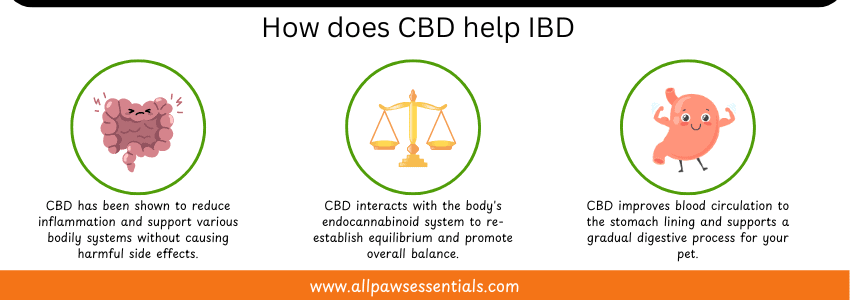
Cannabidiol (CBD) is a compound found in hemp plants. It’s non-psychoactive, meaning it won’t get your pet high, but it does interact with their endocannabinoid system (ECS). This system regulates many physiological functions, including mood, sleep, appetite, inflammation, and immune response.
When CBD enters the body, it binds to cannabinoid receptors CB1 and CB2 in the endocannabinoid system. In dogs and cats with IBD, CBD’s anti-inflammatory and immunomodulating properties could potentially help calm the overactive immune system and reduce gastrointestinal inflammation.
Research and Benefits of Using CBD for IBD in Pets
Inflammatory Bowel Disease (IBD) can be a challenging condition for both pets and their loving owners. With symptoms ranging from diarrhea to vomiting, pets often experience discomfort and distress. Fortunately, CBD may offer a promising solution to help manage these symptoms and support digestive health in dogs and cats. By incorporating CBD into your pet’s health routine, your furry friend may experience a range of benefits, including:
-
Reducing Inflammation
Inflammation is at the core of IBD and can lead to significant discomfort for your furry friend. CBD is well known for its anti-inflammatory properties, which can be incredibly beneficial for pets suffering from IBD. By interacting with their endocannabinoid system, CBD can help modulate the immune response and decrease the inflammation of the digestive tract.
A 2010 study investigated the effects of CBD and THC in a rat’s model of inflammatory bowel disease (IBD). Both THC and CBD, similar to sulfasalazine (a standard IBD treatment), were beneficial in reducing IBD symptoms.
The study concludes that THC and CBD reduce inflammation in this model. The combination of CBD and THC shows potential therapeutic benefits, suggesting the possible value of phytocannabinoids for IBD treatment.
Another 2011 study investigated the effect of CBD on intestinal inflammation, focusing on its role in IBD. The researchers examined mice with LPS-induced intestinal inflammation.
CBD may help manage IBD symptoms like cramping, bloating, and diarrhea. It can control the inflammatory response during intestinal inflammation. Mice treated with CBD significantly suppressed inflammation in the gastrointestinal (GI) tract.
These results suggest that CBD could be a new therapeutic strategy for treating inflammatory bowel diseases.
By addressing the root cause of inflammation, CBD assists in calming the digestive system and paves the way for better health outcomes.
-
Promoting Appetite and Weight Maintenance
Pets battling IBD often experience a loss of appetite, which can lead to weight loss and malnutrition. Maintaining a healthy weight is crucial for their overall well-being, and CBD comes into play. CBD can help stimulate appetite by alleviating nausea and promoting healthy eating habits. The less anxious your pet feels about their digestive discomfort, the more likely they’ll enjoy their meals again.
A 2013 study reviewed cannabidiol in inflammatory bowel diseases. Cannabis shows promise as a treatment for IBD and other gut issues because its anti-inflammatory properties help reduce inflammation. As such, CBD has become a promising compound because it has typical cannabinoid benefits on the gut without the psychotropic effects. This makes CBD a potential candidate for a new class of anti-IBD drugs.
-
Modulating Immune System
CBD can assist in balancing the immune response, preventing it from becoming overactive and causing excess inflammation in the digestive tract. This modulation can help in reducing the severity of IBD symptoms.
A 2020 study explored how CBD interacts with the immune system and may help with inflammation and gut health. Researchers found that CBD can calm an overactive immune system by slowing down immune cell activity, which could benefit conditions like autoimmune diseases.
It also interacts with receptors in the body that help reduce pain and inflammation while preventing the breakdown of natural compounds that regulate bodily functions. Additionally, CBD blocks a receptor linked to gut inflammation, suggesting it may help with digestive conditions like inflammatory bowel disease.
These findings show that CBD may manage chronic inflammation, alleviate pain, and improve gut health, but researchers must conduct additional studies to fully confirm its effects.
-
Pain Management
As CBD for IBD helps to soothe inflammation, it also alleviates associated pain. Similarly, for conditions like IVDD in dogs, CBD may help reduce both inflammatory and neuropathic pain signals. Pets can experience greater relief and become more engaged in their daily activities.
A 2023 study revealed that cannabinoids can be used in veterinary medicine to treat acute, chronic, and neuropathic pain due to their ability to prevent peripheral and central sensitization. This makes CBD a potential analgesic drug for chronic pain control in companion animals.
-
Gut Microbiome Balance
A healthy gut microbiome is critical for digestive health. While research continues, experts believe CBD helps maintain or restore a healthy balance of gut bacteria, which may improve digestive function and reduce IBD symptoms.
A 2020 study revealed FO (fish oil) and CBD, alone or in combination, can affect the gut microbiota in mice in a manner partly independent of their anti-inflammatory actions. The gut microbiota has been suggested to be one of the underlying causes of IBD.
-
Stress and Anxiety Reduction
Pets suffering from IBD may feel anxious due to their condition. CBD for IBD has shown the potential to reduce anxiety and promote relaxation, contributing to an overall sense of well-being.
In a 2019 survey among Canadian dog owners who were asked if they had ever bought hemp or marijuana products for their dog(s) (n = 104), 83 (79.8%) replied yes, and 21 (20.2%) said no. Among participants (n = 83) who said yes, 39.8% revealed that it helped relieve anxiety in their dogs. Also, 55.4% of the participants revealed CBD products were more effective.
Conclusion
With regard for CBD managing your pet’s IBS, it’s clear that this natural remedy could offer a soothing path to improved digestive health for our furry companions. Given its benefits, CBD products represent a promising alternative or complementary approach to traditional treatments. In fact, it is increasingly being explored as part of alternative therapies for pets.
CBD may help ease inflammation and pain, leading to a more comfortable life for pets battling IBD and enhancing pets’ overall quality of life. Always consult a vet before adding CBD to your pets to ensure their safety and well-being, helping them lead happier and healthier lives.